11.19.26
University of Florida Scientists Set to Fly on NASA-Funded Research Mission with Virgin Galactic
Space biologists Anna-Lisa Paul and Rob Ferl are set to conduct their own experiment in flight to study how plants adapt in space
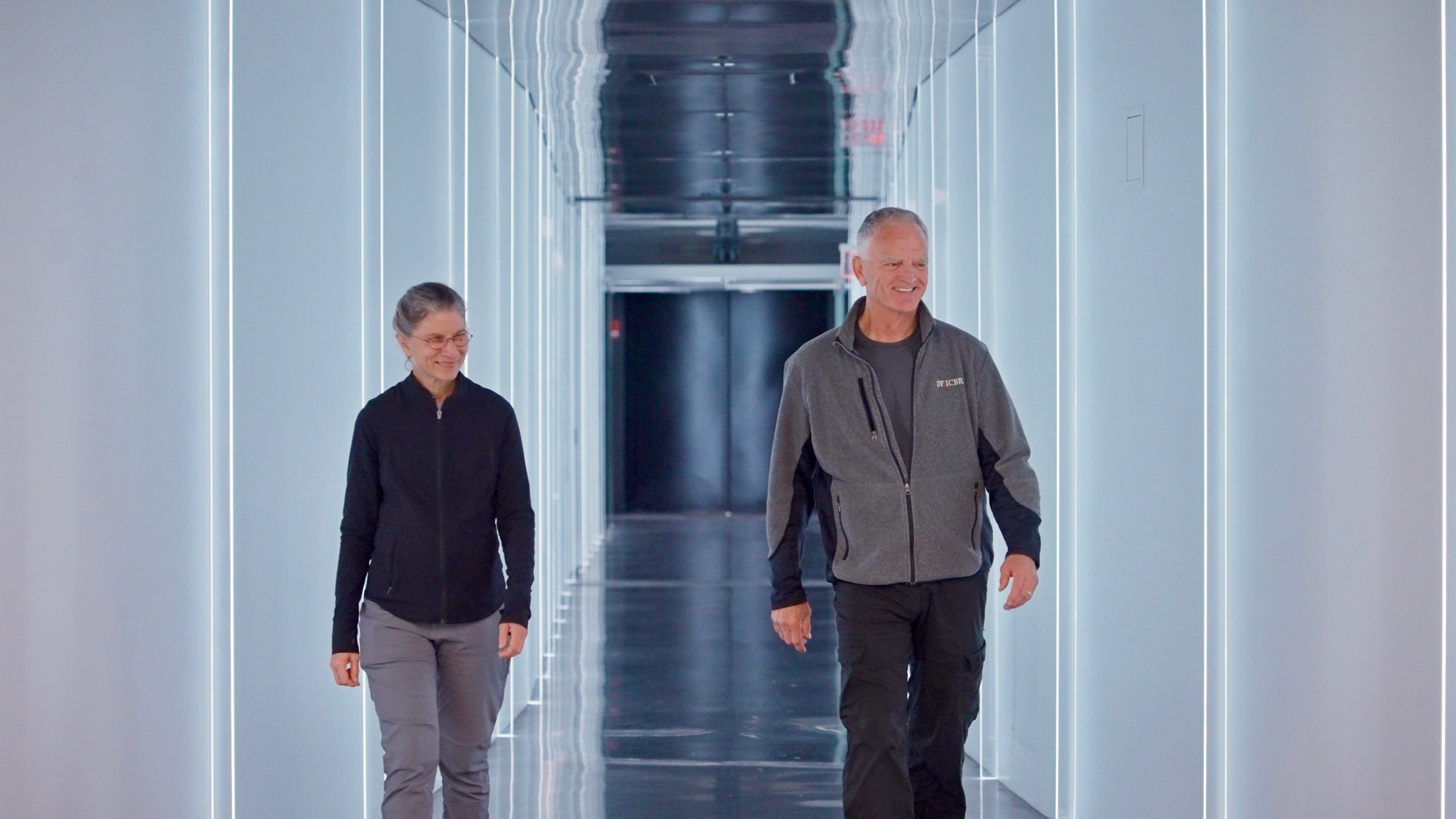
Two University of Florida (UF) scientists are set to conduct their own plant microgravity experiment aboard Virgin Galactic’s new Spaceship, Apeiron, which is expected to take flight in 2027, paving the way for future university researchers to work in space.
The flight marks the next chapter in a long-running research partnership between Virgin Galactic and UF space biologists Anna-Lisa Paul and Rob Ferl. The UF team’s plant experiments first flew with Virgin Galactic autonomously, with onboard cameras capturing fluorescent responses in the plants at different stages of flight. Then, in 2021, a company mission specialist on Virgin Galactic's Unity 22 mission tended an experiment in the cabin, collecting and preserving plant samples throughout the flight.
“The experiment that was conducted on the Unity 22 space mission showed us how things changed not just at the beginning of the flight and the end, but during the entire flight,” Paul said. “A lot goes on during the flight that is lost when you only look at the before and the after, and that is the crux of the experiment Rob and I will be flying in 2027.”
Paul and Ferl have been studying how the spaceflight environment affects plants since their first spaceflight experiment aboard Space Shuttle Columbia in 1999. In addition to launching more than a dozen experiments to the International Space Station, in August 2024 Ferl carried their plant experiment to space aboard Blue Origin's New Shepard rocket.
In a paper about that mission published in October 2026, the team reported that the plants began responding to spaceflight almost immediately after leaving Earth, with more than 1,200 genes changing their activity during the flight.
“Together, these flights show that acclimation to spaceflight is not a single biological adjustment that occurs after living in space,” Paul said. “Instead, it is a progression involving different molecular responses during launch, entry into microgravity, descent and return to Earth. We now know that the acclimation begins with that initial transition from Earth to space.”
For the Apeiron mission, Paul and Ferl will focus on some of the genes that responded during previous flights, while exploring how multiple university scientists can work together effectively in the spacecraft environment.
“Repeatability is the hallmark of all science experiments, and Virgin Galactic gives us that opportunity,” Paul said. “It’s like NASA Flight Opportunities says: fly, test, fly. That is the key to getting true insights into what’s happening in these environments.”
“Taking your experiment with you is fundamentally different from handing it off to someone else,” Ferl said. “Putting the researcher directly into the experiment creates better science and better scientists.”
While university researchers have a long and productive history of working with NASA astronauts to conduct their experiments in space, Paul and Ferl maintain that expansion in commercial spaceflight has created new opportunities for academic researchers to enhance science by traveling to space themselves.
“This flight gives us an opportunity to take the next step in scientist-led research in space. Having the scientists who designed the experiment there to conduct it means we can observe what is happening, respond in real time and make decisions that simply aren’t possible with a fully automated experiment,” Paul said. “And with two of us working together, we can conduct a more ambitious experiment, manage more samples and learn not only about how plants respond to spaceflight, but how scientists can most effectively conduct research in space.”
Paul and Ferl are building on the lessons learned on the 2024 mission to develop the experimental processes for this next mission. They recently visited Virgin Galactic’s facility at Spaceport America in New Mexico and began working with mission planners to translate the experiment into procedures the two can perform aboard the Spaceship, including where to mount sample tubes in the cabin and on their spacesuits so they can access them at precise moments during flight.
“Anna-Lisa and Rob’s research has flown with us before, and this time they will be flying to conduct it themselves,” said Mike Moses, president of Spaceline at Virgin Galactic. “Apeiron is designed to serve as a suborbital space lab, with frequent, repeatable access to high-quality microgravity, so scientists can fly, learn and fly again. We’re proud to work alongside the University of Florida team and NASA to make that possible.”
Virgin Galactic expects Apeiron, which arrived in New Mexico in late October 2026, to enter commercial service early in the second quarter of 2027. Paul and Ferl are scheduled to fly on one of the early research missions.
Virgin Galactic uses a launch vehicle to carry the Spaceship to about 45,000 feet before releasing it. The Spaceship is designed to then fire its hybrid rocket motor, propelling it into suborbital space and providing several minutes of microgravity before returning to a runway landing at Spaceport America.
The Virgin Galactic project is funded by NASA’s Division of Biological and Physical Sciences, working with NASA’s Flight Opportunities program.
Anna-Lisa Paul, alp@ufl.edu
Rob Ferl, robferl@ufl.edu
About Virgin Galactic
Virgin Galactic is dedicated to expanding the boundaries of human possibility. Through its spaceflight expeditions, the company offers people a profound new perspective on our planet and their own potential, while enabling scientific discovery and supporting strategic government missions. Virgin Galactic combines world-class aerospace engineering with thoughtfully designed astronaut experiences and a scalable spaceline operating model. Its reusable, air-launched Spaceships are designed to make spaceflight safe, repeatable, operationally efficient, and increasingly accessible, advancing a long-term vision of opening space to millions for extraordinary purposes. Learn more at www.virgingalactic.com
Media Contacts
Aleanna Crane – Vice President, Communications
news@virgingalactic.com
575.800.4422
Joe Kays -- UF Director of Research Communications
352.392.8229