11.19.26
Virgin Galactic Set to Fly University of Florida Researchers on Plant Research Mission Aboard Spaceship Apeiron
Future flight is expected to advance microgravity research and demonstrate new possibilities for scientist-led experiments in space.
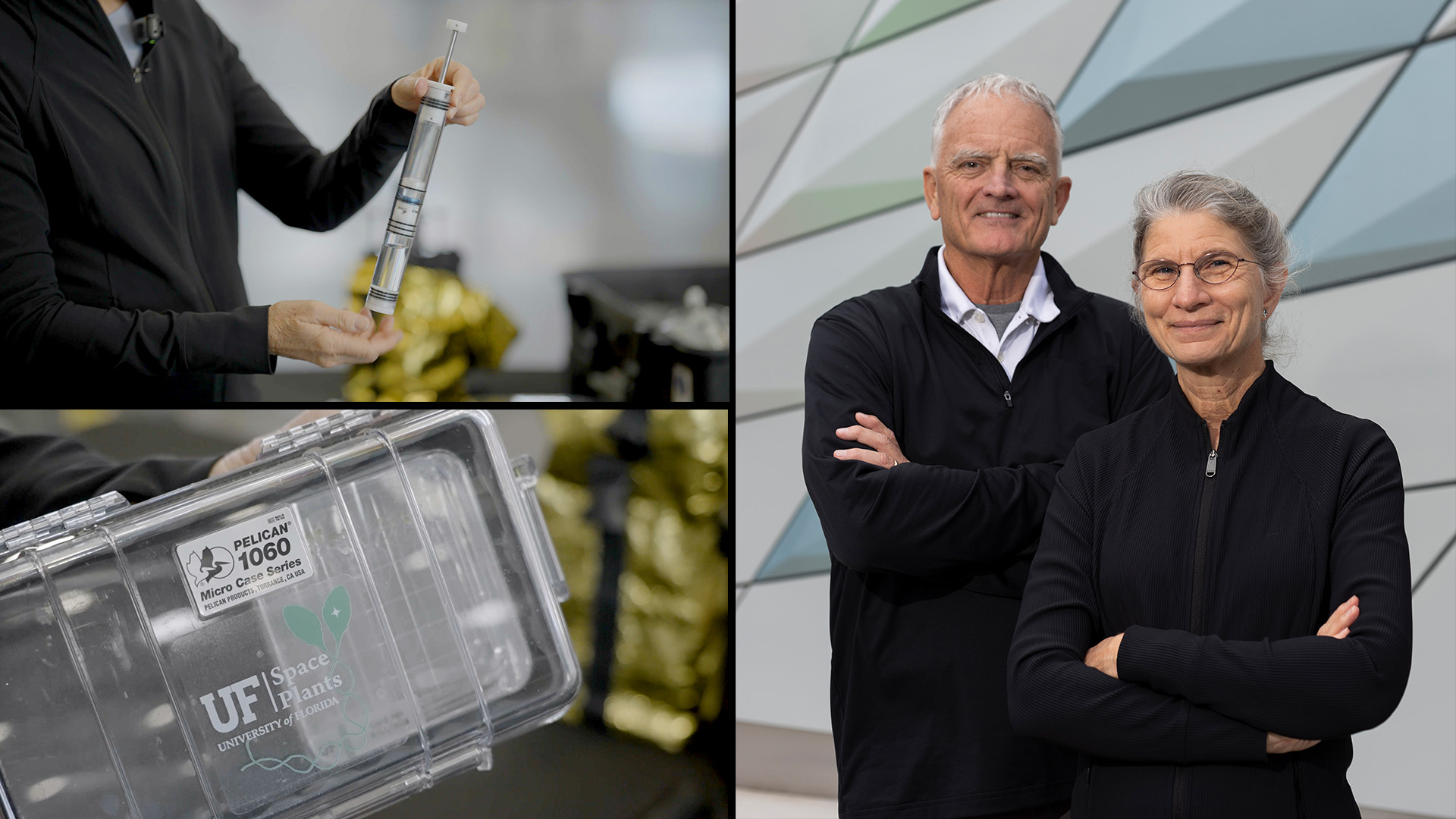
What happens to plants as they transition from Earth to microgravity? And what more could scientists discover if they could conduct their own experiments in space?
We’re helping two University of Florida researchers find out.
Space biologist Dr. Anna-Lisa Paul and her longtime collaborator, Dr. Rob Ferl, are set to fly aboard Virgin Galactic’s lead Spaceship, Apeiron, on a research mission expected in 2027. Together, they’ll conduct a plant microgravity experiment that builds on decades of research while exploring how scientists can work side by side in space to advance their findings. The mission is funded by NASA Biological and Physical Sciences in collaboration with NASA’s Flight Opportunities program.
Taking Science Into Their Own Hands
This mission won’t be the first time the team’s research has flown with Virgin Galactic. In 2021, a Virgin Galactic mission specialist tended their experiment in the cabin during Unity 22, collecting and preserving plant samples throughout the flight. In 2024, Ferl carried the plant experiment on a suborbital flight, and the research showed that plants begin responding to the spaceflight environment almost immediately after leaving Earth.
The researchers plan to examine specific genes identified during that flight while demonstrating how multiple researchers can conduct more ambitious experiments together in microgravity.
As Paul explains:
“Having the scientists who designed the experiment there to conduct it means we can observe what is happening, respond in real time and make decisions that simply aren’t possible even with a fully automated experiment.”
The pair recently visited Spaceport America in New Mexico to begin working with Virgin Galactic mission planners on procedures they’ll perform aboard Apeiron, which arrived at the facility in October.
A New Chapter for Research in Space
For Virgin Galactic, this mission advances our effort to make space-based research more accessible, repeatable and hands-on. Our spaceflight platform enables researchers to refine experiments, build on previous findings and return to space to advance their work.
Our previous Spaceship, VSS Unity, completed seven suborbital research missions, supporting experiments ranging from human health to fluid dynamics. Upcoming collaborations include additional research with the International Institute for Astronautical Sciences, Purdue University’s chartered mission, Operation Period’s study of menstruation in microgravity, and our three-year partnership with Space for Humanity.
With our next-generation Delta-class Spaceships, we’re building on that foundation and creating more opportunities for researchers, universities and organizations to take their science beyond Earth.
Because sometimes the next big discovery requires getting out of the lab and into space.